


Call us now
08071793640
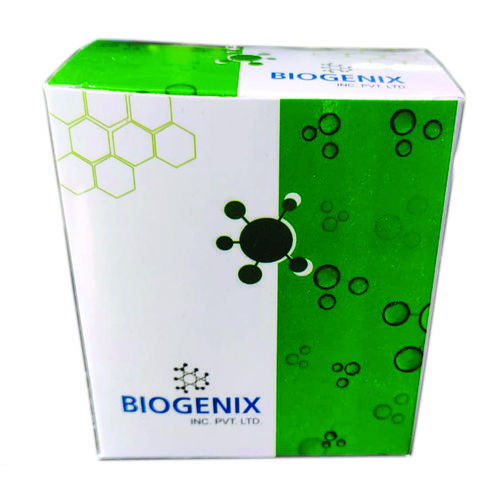
Bilirubin Total
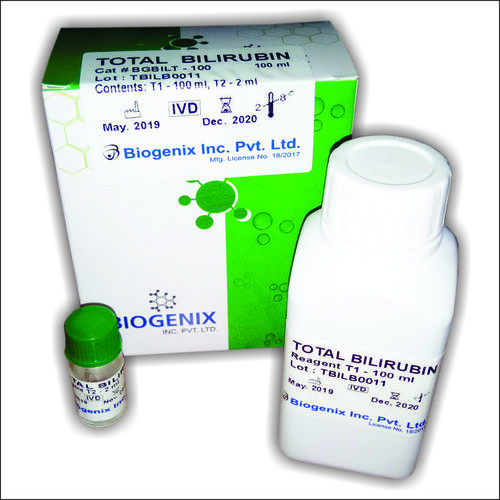

Bilirubin Total Trade Information
- Minimum Order Quantity
- 1000 Milliliters
- Sample Policy
- If order is confirmed we will reimburse the sample cost
- Main Export Market(s)
- Asia, Australia, Central America, North America, South America, Eastern Europe, Western Europe, Middle East, Africa
- Main Domestic Market
- All India
About Bilirubin Total
Sulfanilic acid reacts with sodium nitrite to form diazotized Sulfanilic acid. In the presence of accelerator (cetrimide), conjugated and unconjugated bilirubin reacts with diazotized Sulfanilic acid to form azobilirubin (Bilirubin Total). In the absence of accelerator only conjugated bilirubin reacts (Bilirubin Direct). The increase of absorbance at 546 nm is proportional to bilirubin concentration.
Efficient Bilirubin Measurement
Bilirubin Total provides reliable and accurate measurement of total bilirubin, essential for diagnosing liver conditions. Its compatibility with serum and plasma samples makes it versatile for clinical applications, while the colorimetric method ensures precise quantitative results.
Convenient Packaging and Shelf Life
Supplied in a 4 x 50 ml format, this liquid reagent is tailored for laboratory efficiency and minimizes waste. With a 12-month shelf life under proper storage conditions, users benefit from long-lasting performance and stable results.
Universal Analyzer Compatibility
Designed for use with semi and fully automated analyzers, Bilirubin Total integrates seamlessly into standard laboratory workflows. This broad compatibility streamlines operations, supports high-throughput testing, and reduces the need for specialized reagents.
FAQs of Bilirubin Total:
Q: How is the Bilirubin Total assay performed using this reagent?
A: The Bilirubin Total reagent utilizes a colorimetric method, where the reagent reacts with total bilirubin present in human serum or plasma. The change in color intensity is measured using an automated analyzer, providing precise quantitative results.Q: What type of sample is required for this bilirubin determination?
A: This assay requires a serum or plasma sample from human patients. The specimen should be properly collected and stored at recommended temperatures prior to assay.Q: When should Bilirubin Total be used in clinical settings?
A: Bilirubin Total should be used whenever quantitative measurement of total bilirubin is clinically indicated, such as during diagnosis or monitoring of liver disorders or hemolytic conditions.Q: Where can Bilirubin Total be applied or used?
A: Bilirubin Total is intended for use in laboratory and clinical settings equipped with semi or fully automated analyzers. It is suitable for hospitals, diagnostic centers, and research facilities.Q: What is the process for using Bilirubin Total in laboratory workflows?
A: The reagent is dispensed according to analyzer instructions and mixed with the serum or plasma sample. After incubation, the analyzer measures the resulting color change and calculates the bilirubin concentration.Q: How should Bilirubin Total be stored for optimal stability?
A: The reagent should be stored at a temperature between 2C and 8C. Following these guidelines maintains reagent integrity and ensures accurate results throughout its 12-month shelf life.Q: What are the main benefits of using Bilirubin Total in clinical analysis?
A: Bilirubin Total offers precise, reliable results, easy integration with automated analyzers, and convenient liquid format packaging. It supports efficient laboratory operations and aids in the accurate diagnosis and monitoring of bilirubin-related health conditions.Tell us about your requirement

Price:
Quantity
Select Unit
- 50
- 100
- 200
- 250
- 500
- 1000+
Additional detail
Mobile number
Email

More Products in Clinical Biochemistry Kit Category
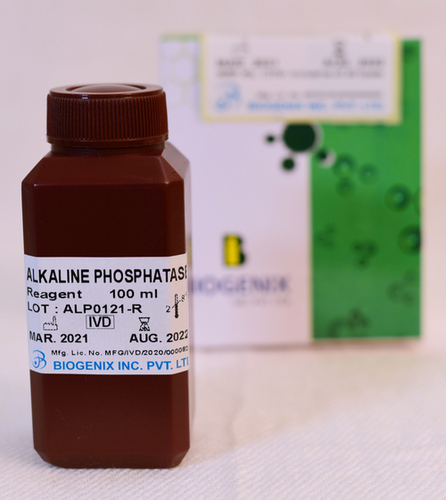
Alkaline Phosphatese (Liquid)
Price 13.75 INR / Milliliter
Minimum Order Quantity : 1000 Milliliters

GST : 09AAGCB6941G1ZJ

B19/A , S.I.L Ancillary Estate Amausi Industrial Area, Nadarganj,Lucknow - 226008, Uttar Pradesh, India
Phone :08071793640
 Send Inquiry
 Send Inquiry
 Send SMS
BIOGENIX INC. PVT. LTD.
All Rights Reserved.(Terms of Use)
Developed and Managed by Infocom Network Private Limited.
Developed and Managed by Infocom Network Private Limited.

